HomeStage 3 · Trades and long-term healthTrades and long-term health guide
By Global PrepperUpdated 4 official sourcesHow we make the guides
Stage 3 · Trades and long-term health guideTrades and health: know-how
In a long crisis, knowing how is worth more than owning. A trade makes you useful to your community, and looking after your health prevents what nobody will be able to cure.
- Choose a trade and practice it starting today.
- Daily medications: talk to your doctor about keeping a supply.
- Teeth, eyes and vaccines up to date: what isn't treated today hurts tomorrow.
- A health book on paper, for when there is no internet.
Learn something others need
- Start with hand sewing: with a needle and thread you can fix clothes, backpacks and tarps.
- Collect hand tools: hammer, handsaw, screwdrivers, pliers, file and sharpening stone.
- Practice once a week: what you don't practice, you forget.
Long-term health: prevention
- Chronic medicationsThe Red Cross asks for at least 7 days in your kit. Ask your doctor and your pharmacy how to build up more.
- TeethToothbrush, toothpaste and floss for months. A toothache with no dentist is serious.
- EyesA spare pair of glasses with your prescription.
- VaccinesTetanus: a booster every 10 years, or sooner if you get hurt on something dirty and more than 5 have passed.
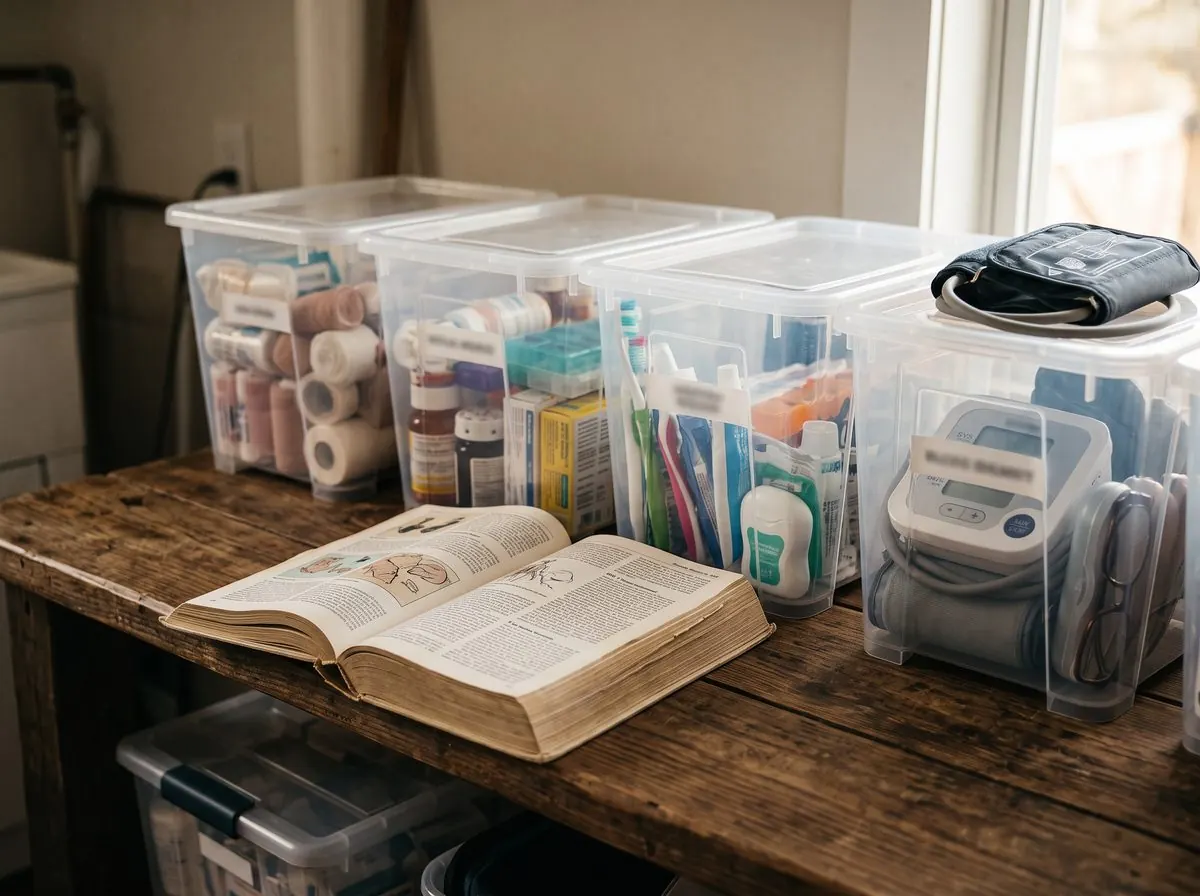
Expanded first aid kit: pain relievers, oral rehydration salts, antiseptics, bandages, a thermometer and a blood pressure monitor.
Courses and books before you need them
- A first aid course with your country's Red Cross, and then the advanced one.
- A neighborhood brigade: ask your city or county whether your civil protection agency or a CERT team offers free training.
- “Where There Is No Doctor”, from Hesperian: a health manual for places without a doctor, also in Spanish. It has free sample chapters.
- One trade per person in the family: that way the tasks get shared.
No book replaces a doctor. Use it to prevent problems and to act while help is on the way.

Check what you already have
0 of 5 · Saved only on this device.
- Buying tools and never learning to use them.
- Running out of chronic medications because you didn't plan.
- Leaving a toothache or a wound "for later."
Sources: Hesperian · Where There Is No Doctor · IFRC · first aid 2020 · CDC · tetanus: when to vaccinate after a wound · American Red Cross · Be Red Cross Ready
Do you remember?
Three questions about this guide. Get all three right to earn its badge. There's no time limit.