HomeStage 3 · Your own waterOwn water guide
By Global PrepperUpdated 4 official sourcesHow we make the guides
Stage 3 · Own water guideYour own water: rain and a good filter
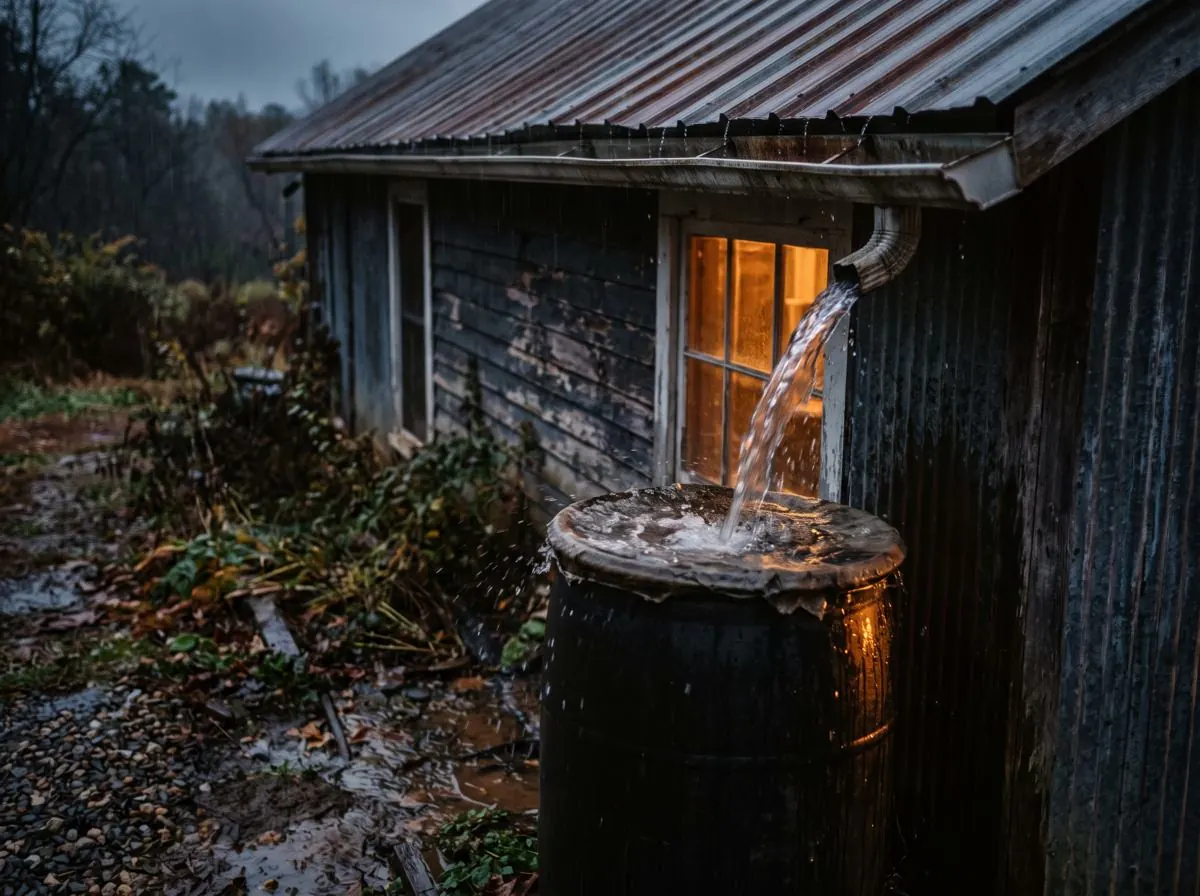
Stored water runs out. A roof, a gutter and a tank collect hundreds of liters in a single rain, and a homemade filter leaves it ready to chlorinate or boil.
- 1 mm of rain on 1 m² of roof = 1 liter, and about 80% reaches the tank.
- Divert the first flush of each rain: it washes the roof.
- A covered tank, in the shade and out of the light: that way algae and mosquitoes don't grow.
- Filtered is not enough: chlorinate or boil it before drinking.
From the roof to the tank
- Clean roofMetal sheet, tile or concrete without lead paint. Remove leaves and dust before the rainy season.
- Gutter and downspoutCarries the water from the edge of the roof through a pipe to the tank.
- First-flush diverterA pipe that fills first with the dirty water. Plan for at least 0.4 liters per m² of roof (10 gallons per 1,000 ft²): 20 liters for 50 m².
- Closed tankWith a lid, a screen on the inlet and a tap above the bottom so you don't draw sediment.
How much you collect: a 50 m² (540 sq ft) roof with 10 mm of rain gives about 400 liters (105 gal).
A biosand filter made at home
- The containerA barrel or tall bucket with an outlet pipe that runs up the outside.
- The layersFrom bottom to top: coarse gravel, fine gravel and fine washed sand, always with water on top.
- The living layerWithin up to 30 days a layer of good microbes forms on top and traps the harmful ones. Until then, disinfect the water.
- Use it every dayPour the water through a diffuser and let it rest between loads for 1 to 48 hours, ideally 6 to 12.
The filter removes 88 to 98% of bacteria in the field and only some of the viruses. After that, chlorine or boiling.
Spring, well or river: protect them
Latrines and livestock pens more than 30 meters (100 ft) from any water source, and never uphill from it.
- Keep drinking water separate from irrigation water.
- Check for cloudy water after heavy rains.
Check what you already have
0 of 5 · Saved only on this device.
- Drinking rainwater without treating it because "it's clean."
- Letting the first burst of rain into the tank.
- Leaving the tank uncovered or in the sun.
- Digging the latrine near the well.
Sources: Isla Urbana · Texas Water Development Board · rainwater harvesting manual · CAWST · biosand filter fact sheet · Sphere Handbook · water and sanitation
Do you remember?
Three questions about this guide. Get all three right to earn its badge. There's no time limit.