HomeStage 3 · Preserving foodFood preservation guide
By Global PrepperUpdated 5 official sourcesHow we make the guides
Stage 3 · Food preservation guidePreserving food: make the harvest last
What you don't preserve is lost at harvest. Sun, salt, vinegar and sugar have preserved food for thousands of years, without a refrigerator.
- In the sun, fruit only, in thin slices; vegetables and meat, in an oven or dehydrator.
- 5% vinegar, salt and boiled jars for pickles.
- Vegetables, beans or meat in jars: only with a pressure canner.
- Bulging lid or bad smell: throw it out without tasting.
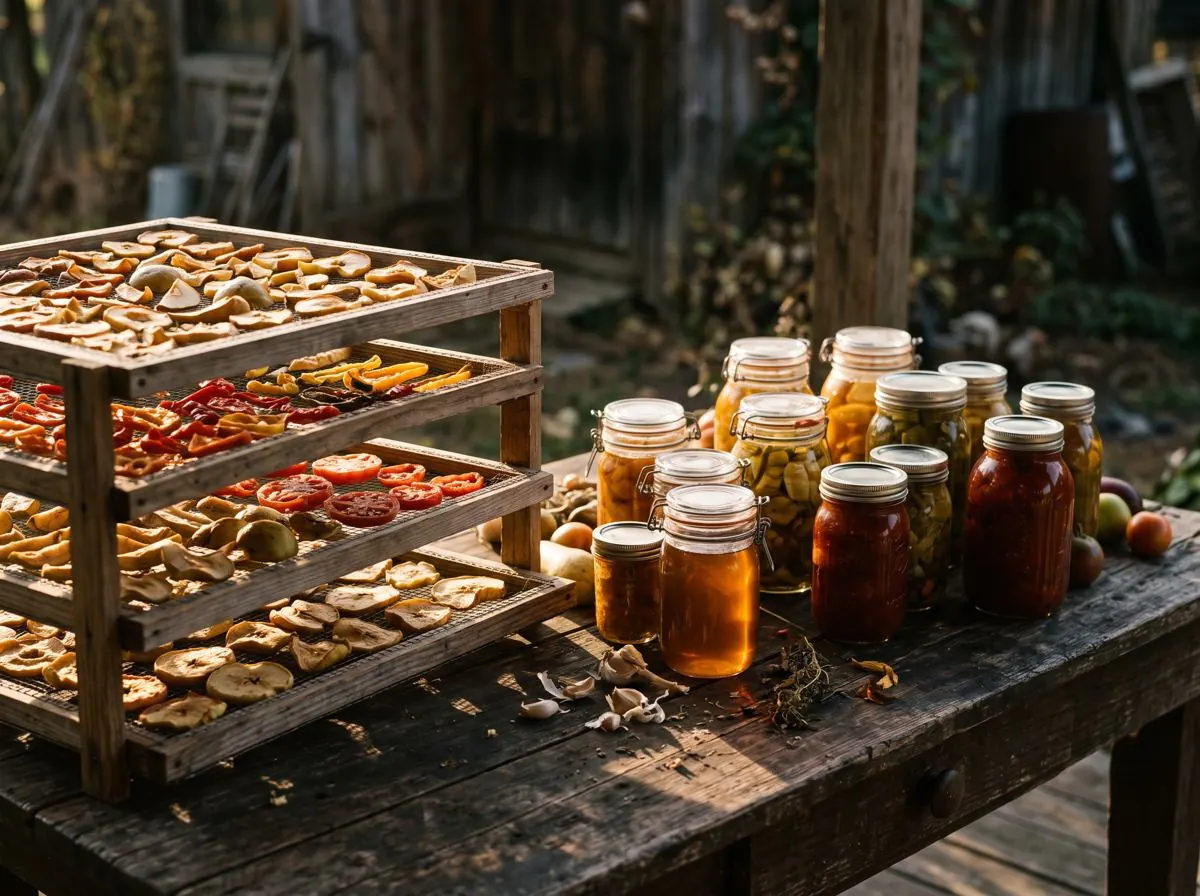
A solar dryer made of wood and screen
- Thin slicesHalf a centimeter (¼ in), even so they dry at the same rate.
- Inside the dryerA box with a clear lid and insect screen, in the sun and with airflow.
- Several daysAt 29 °C (85 °F) or more and dry air (humidity under 60%), until the fruit is leathery. Bring it indoors at night: dew wets it.
- Store in a jarSealed, in a dry place. If moisture appears, dry it again.
Do not sun-dry vegetables or meat: fruit can take it because of its sugar and acid; they cannot. And always under a screen against flies and dust.
Vinegar, salt and clean jars
- Boil the jarsJars and lids for 10 minutes in boiling water.
- Make the brine5% vinegar and water in equal parts (do not dilute it further), with 1 to 2 teaspoons of non-iodized salt per cup.
- Fill and coverRaw or blanched vegetables, completely covered with the hot liquid.
- Water bathTo store outside the refrigerator, boil the sealed jars: 10 minutes for ½-liter (1-pint) jars below 300 m (1,000 ft); add 5 minutes up to 1,800 m (6,000 ft) and 10 up to 3,000 m (10,000 ft).
Another option without vinegar: sauerkraut, shredded cabbage with a little salt, packed into a jar until it releases its juice.
Botulism: the risk in jars
If the lid is bulging, foam comes out or it smells off, throw it out without tasting. Botulism spores survive boiling; only acid or pressure stops them.
- Label each jar with its contents and date.
- Use the oldest first; homemade preserves within the first year.
Check what you already have
0 of 5 · Saved only on this device.
- Canning vegetables or beans in a water bath or in a kitchen pressure cooker.
- Tasting from a jar with a bulging lid "to see if it's still good."
- Drying food in the open without a screen.
Sources: WHO · botulism · NCHFP · sun drying · USU Extension · water bath or pressure canning · SDSU Extension · pickling with a tested recipe · University of Minnesota · canning tomatoes, with acid
Do you remember?
Three questions about this guide. Get all three right to earn its badge. There's no time limit.